
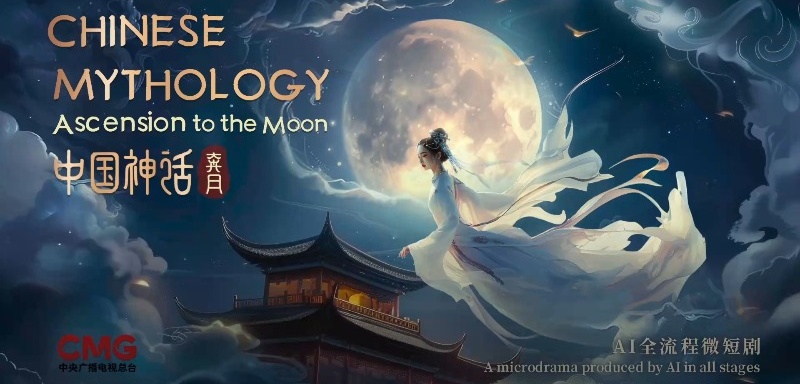
In response to the short-time drama, the TVB, Bona, etc. have launched a series of related works, and the radio system, media companies and technology giants have joined in. Behind the market raging, is the Ai shorts the future of the media?
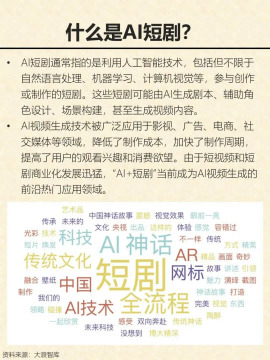
It’s hot.
In recent years, the country has witnessed the explosion of micro-short dramas, which began with the production of small-size companies or studios, and the ease of the AI tool, which has prompted a large number of media users to use AIG to generate comic shorts and science shorts. In this wave, both the radio system and the major media companies joined in.
On September 15th, the first AI in Hong Kong television generated the youth school love short ” You are One in My Mind ” , which landed on my TV SUPER and TVB Plus. The show, produced by TVB Plus and produced by myTV SUPER, is not more than two minutes each and claims 100 per cent to be produced by AI, in which two of the stars have opened personal social accounts to interact directly with fans.
As early as last year, the Bonner industry made a bold attempt – producing a short play with AI, The Tristars: A Revelation of the Future, on the vibrating platform, the country’s first AIGC short play, which has been licensed for the distribution of web-based plays, with over 200 million Internet-wide broadcasts to date. At present, more than a dozen A stock listed companies have been set up in the field of AI short play: the National Pulse Culture has cumulatively completed 240 series of AI short play creations, and Kronwanwie has released the Ai short play creation platform SkyReels, and the Wigand Brothers have stored seven Ai short plays and one Ai film, and several projects have been completed and will continue online.
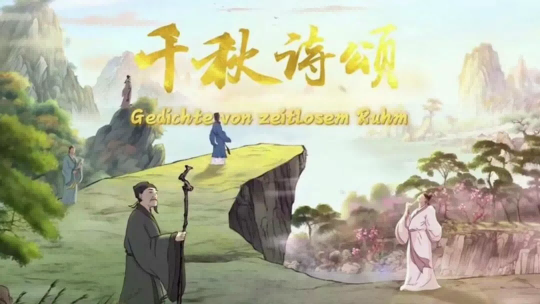
On the other hand, within the wide-wire system and under the guidance of the Shandong Provincial Radio and Television Authority, the Shandong Digital Cultural Group, United World Confucius Center for Nessan (the secretariat of the Confucius Foundation of China), launched 36 series of Ai micro-short dramas, Nessan Rock, on the life of Confucius. Many television stations are planning or have carried out the production of the short play. At the same time, in the areas of rule of law promotion, anti-fraud education, red culture transmission, many units and businesses have begun to try to integrate the content of AIGC into the short play and even to produce a full-on-Ai short show: the first-ever view of the video was generated by the use of AI technology to pay tribute to Long Wah’s luminous, red-acting cartoon short play “Rong Hua Feng Cloud ” ; the full-AAI co-coordinated version of the anti-war micro-short play “No Truth Shows, No Vision Filming, No Move Fishing Technology” by means of the full-scale AI production of the full-process AI and to be decaptated at the top of the CSM national network.
It is no exaggeration to say that the Ai short play has become a full-fledged festivities, and that the market size of the mini-short show has surpassed the entire Chinese film market since last year, reaching 50 billion yuan, which attracts all parties. At the Beijing Forum 2025, hosted by the Beijing City Broadcasting Authority and co-sponsored by the 100-do APP, the head of the 100-digit content operation said, “Now there may be more short play-players than some take-outs”. The most intuitive figure is that the microtrama is now very “rolled” at the end of production, and there are nearly 100,000 existing microtrip-related businesses, almost 10,000 registered in 2024. This was accompanied by the double pressure of precision and downscaling efficiency, so many people appreciated the AIG ‘ s contribution to short play production.
Stifling: prejudice and challenges
However, there are many who doubt that the heat of this short-time show in AI is nothing more than a head start, and that the effect is far less than that of advocacy. At present, there are a number of challenges at the technical level for the production of AI short plays.
AI is better at generating static or simple dynamic images, but in longer short dramas, how to keep exactly the same face, hair, and five officials from the same AI-generated characters in different lenses, different angles, different faces is one of the greatest challenges at present, and minor differences will allow the audience to play; and the layout, light, color, proprietors of the AAI video in different scenes of the same scene (e.g. panorama, medium view, feature) will also be difficult to reconcile, and it will be easy to introduce unmanageable changes in detail at each time of generation; it will also need to be consistent in different scenes as well as in the clothing, fittings, etc. of the role. These are prominent technical difficulties and it is difficult for producers to control them accurately.
While current sound cloning techniques are advanced in the audio production process, a great deal of later work is required to achieve natural emotional upswing and precision matching with oral styles. A perfect match between the character’s mouth and the line (the mouth) is the basic requirement for video production, but in the AI short play this requires additional, complex technical steps.
In the evolution of the role, while some tools can be used to control the position, it remains very difficult to generate a “specific” expression with complex emotions. The expression generated by AI often appears rigid or non-natural. For complex lens languages, while the words “film sense” and “specialized lens” can be entered, accurate control of camera movements, complex scene scheduling, multi-person interaction AI is not in the best position. The hint entered at the same time does not exactly convey the director’s intent. AI may misinterpret the hint or “freedom to play” elements that are not required to join. And it’s easy for the AI model to produce an “AI-savory” and it’s easy for the style to converge, and it looks like a “waterline product.”
In addition, current mainstream AI video generation models make it difficult to maintain consistency in time and space when growing up. Objects may suddenly appear or disappear, and physical patterns (e.g. gravity, water flow) are often subject to error. Moreover, the current large model is still difficult to generate directly high-resolution, high-resolution, high-resolution video, and in many cases needs to be scaled up and enhanced, relying on “taubus” or later, which further increases the risk of inconsistency.
In order to overcome the uncertainties at the technical level, significant human and time costs are required, and it is common practice to generate a large number of material clips, which are then combined by professional laterists into a coherent story by means of clippings, special effects, mosaics, sound-formulations, etc., with a much larger workload than real-person filming.
It is clear that the production of IA shorts is not as simple as expected, and that some units produce IA shorts to keep up with fashion and the wind, resulting in low-quality productions that are not only not reaching out, but rather making jokes. In recent days, under the guidance of the Web Letter Office of the Tianjin City Council, the Tianjin Network Rule of Law Time Studio, a short series of Tianjin Network Rule of Law AI shorts produced by Tianjin Jin Yun New Media Group: The Great Holy Return Cyber Security War, is a living case. The quality of the video, despite its popularity, is not as good, except for the fact that the picture is of poor quality and the audio is rigid, even less than the vast majority of the IA shorts produced by the media.
Another 3D wave?
Today ‘ s Al-Ai short-time boom is more than a decade ago, with 3D and IMAX just rising in 2009, and almost instantaneous developments in the country, with the first 3D film, Avatar, coming out of the world, and a global wave of images, with a national IMAX-3D ticket that can be fired at more than 2,000. The 3D viewing equipment also became the most fashionable technology product at the time, and all major plants were following this 3D windway. In 2010, Sony filmed the World Cup with a 3D camera and opened a 3D transmission line, and Samsung, Matsumoto and LG launched 3D television in the same year. At the national level, however, the development of 3D television technology was directly included in the 12th Plan for Radio Television, which was launched on the first day of 2012 by a pilot 3D television channel co-sponsored by six television stations. The launch of the 3D television pilot channel was described by the press spokesman of the General Directorate as a new milestone in the country ‘ s history of radio and television development. The country ‘ s 3D television sales reached 187,29,000 in 2013, with a penetration rate of nearly 40 per cent. Not only are 3D televisions released, but large factories have even launched 3D mobile phones, 3D players and many consumers have paid for them, and the 3D concept seems to have disappeared overnight, as if the heat had not happened, only some films would produce 3D versions, and a significant proportion of them were still very ill, and our 3D television pilot channel was shut down in 2018.
The rapid retreat of the 3D tide is an important reason for this. At that time, many large plants were rushing to pre-empt the market and to launch a range of 3D products in a situation where technology was not yet fully developed and content was scarce. For example, 3D mobile phones, 3D games, etc., are not able to meet consumer needs due to poor experience. At the same time, a large and blind influx of capital is seeking to reap benefits only from the rapid roll-out of products, while ignoring the deep tillage and optimization of the 3D technology core. Moreover, content producers have been rushing to produce 3D versions of the film in an uneven manner. This burgeoning and voracious approach has led to the emergence of 3D hot tides, quickly losing market support.
Today, the AI short play is also popular in the market, and compared to the current shortcomings of the AI short play, entryists hope that the development of AI will overcome these ills as soon as possible and that it will be in line with the broad prospect of “dissemination”.
In recent years, the mini-short drama industry itself has reached its peak, with the market for micro-short dramas in China reaching 50.5 billion yuan in 2024, with 576 million users, or 52.4 per cent of the total number of Internet users.
Compared to the traditional micro-short play, the AI short play has the unique advantage of being able to use a large-language model to emerge in a short and smooth rhythm. At the end of the production, AI shorts can produce a first draft of the script in a relatively short period of time through the application of large language models such as ChatGpt. Technologies such as the Al-Vanctuary and the Tuctuary Video have replaced the high-cost visualization and animation modelling and circumvented the high cost and high risk of field filming. While increasing the efficiency of short play production, it has reduced the cost of scenes and human costs, left more time and money to grind short play, significantly reducing the production cycle. The development of AI technologies, such as bean buns and Deepseek, has further accelerated the development of the micro-fatry sector, with market size projected at $6.343 billion in 2025, surpassing $85.65 billion in 2027 and a combined annual growth rate of 19.2 per cent. At the same time, the data of the users are equally bright, with the semi-annual growth rate of 14.8 per cent in December 2024 for the users of the mini-short drama, with the first quarter of the year, such as The Tristars: The Apocalypse of the Future, with over 160 million Internet-wide transmissions, and the New World Loading, with almost 200 million broadcasts, confirming the strong demand in the market.
As far as dissemination is concerned, the AI tool reinforces the short play’s “short flat” quality and is better suited to the short video ecology’s fast-temperature characteristics. Through the pain, grinding and modification of the text by AI, a long and complex first draft of the script can be quickly transformed into a fast-paced script, with a sophisticated design of high-frequency reverses, ups and downs in a single collection of 1 to 5 minutes. In other words, the AI tool allows quick iterative scripts to bring short play producers closer to market hot spots. For example, the optical media, using AI, can only systematically conduct bulk assessments and diagnostics of the company ‘ s backlog of thousands of scripts, significantly reducing the luxurious cycle of traditional scripts, with the production of a full 90-minute script within three hours, with the help of AI tools.
Moreover, the expansion of diversified business models can increase the market space for the AI short play. The current AI short play has proven a wide range of profit paths: paid on-demand, the “Hingle Angel Scroll” has generated over $300,000 a week. In branding, AI can generate targeted advertising for inclusion in the short play, achieve flexible advertising and multiple forms of hard advertising, and expand the space for short-term dramatic gains. At the same time, AI technologies can combine VR and AR technology to create interactive payment models, achieve multi-cramaline parallels through role selection, create new scenes of new business practices for consumption, and further enhance consumer willingness to form a “content consumption + user creation” business model. In addition, AI technology can be linked to 3D printing, customizing production around short dramas, expanding the consumer landscape of users below the line and reproducing content values.
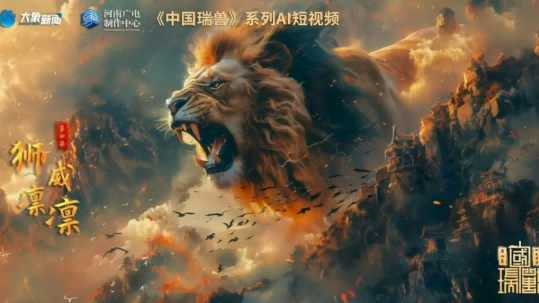
Concrete with the future
Taken together, the possibility of the AI short play relapsing into the 3D boom is less likely, but how to adapt to the short and smooth spread and rational use of AI technology becomes an age test that the media industry must face in the digital transition. The AI short play, which is neither a mere mirage nor an exclusive representation of the future, is of real value not to subvert traditional visualization, but to reshape the logic of content production and lead to an efficient revolution and creative innovation in the media industry.
In the final analysis, the test of whether the AI short play is “the future” is not how perfect it is now, but whether it responds to the trend of the media industry towards “discretion, individualized demand, light quantification of production”. From this perspective, the AI short play may not be the full answer for the future of the media industry, but it must be an essential part of the answer.