
TikTok is accelerating the transition to a comprehensive social platform and recently announced the introduction of a series of enhanced direct news (DM) features aimed at enhancing the interaction experiences of users while strengthening security and privacy protection measures. Supporting the platform evolved from a community with short video content at its core to a social space to support more human interaction.
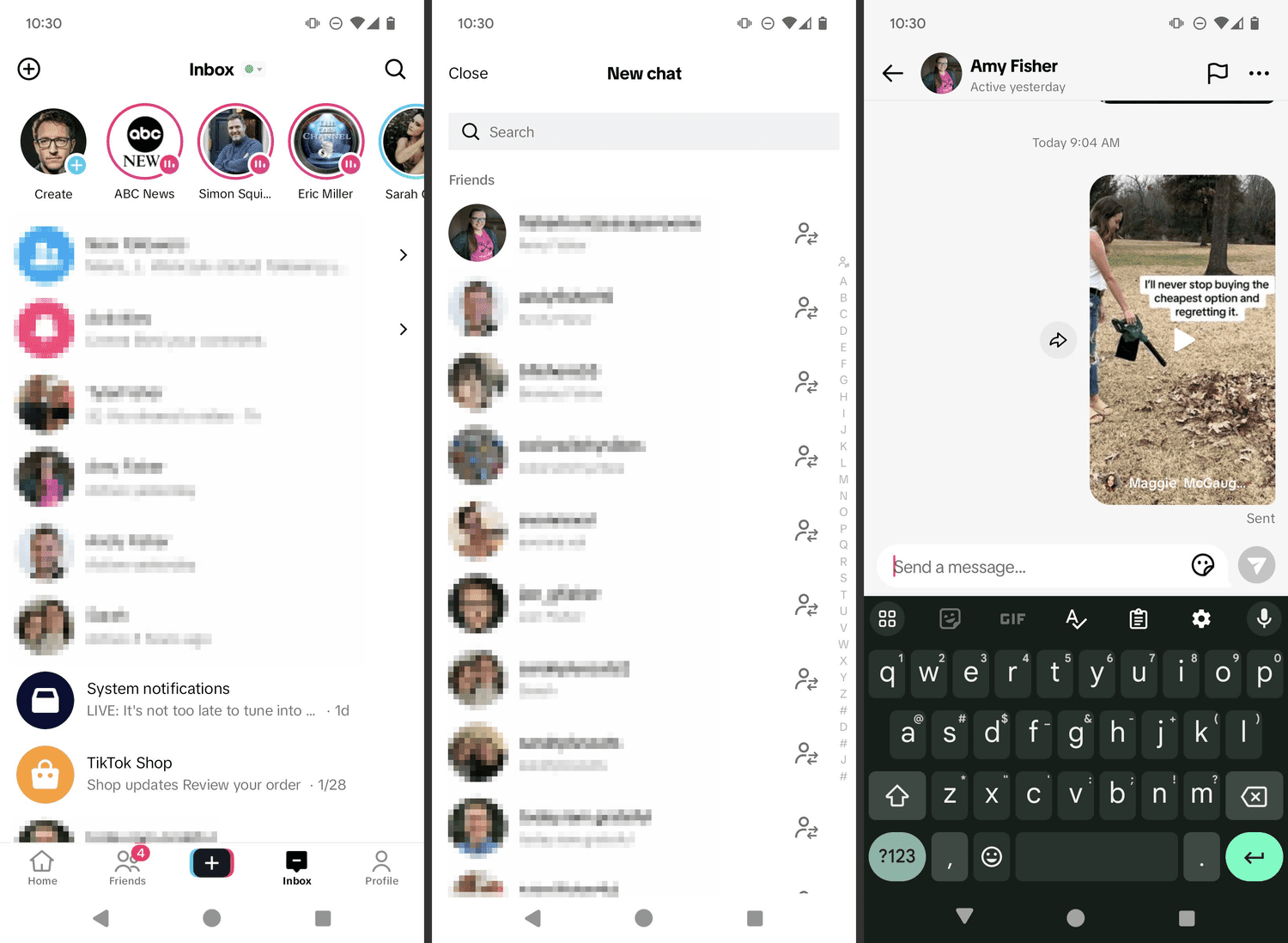
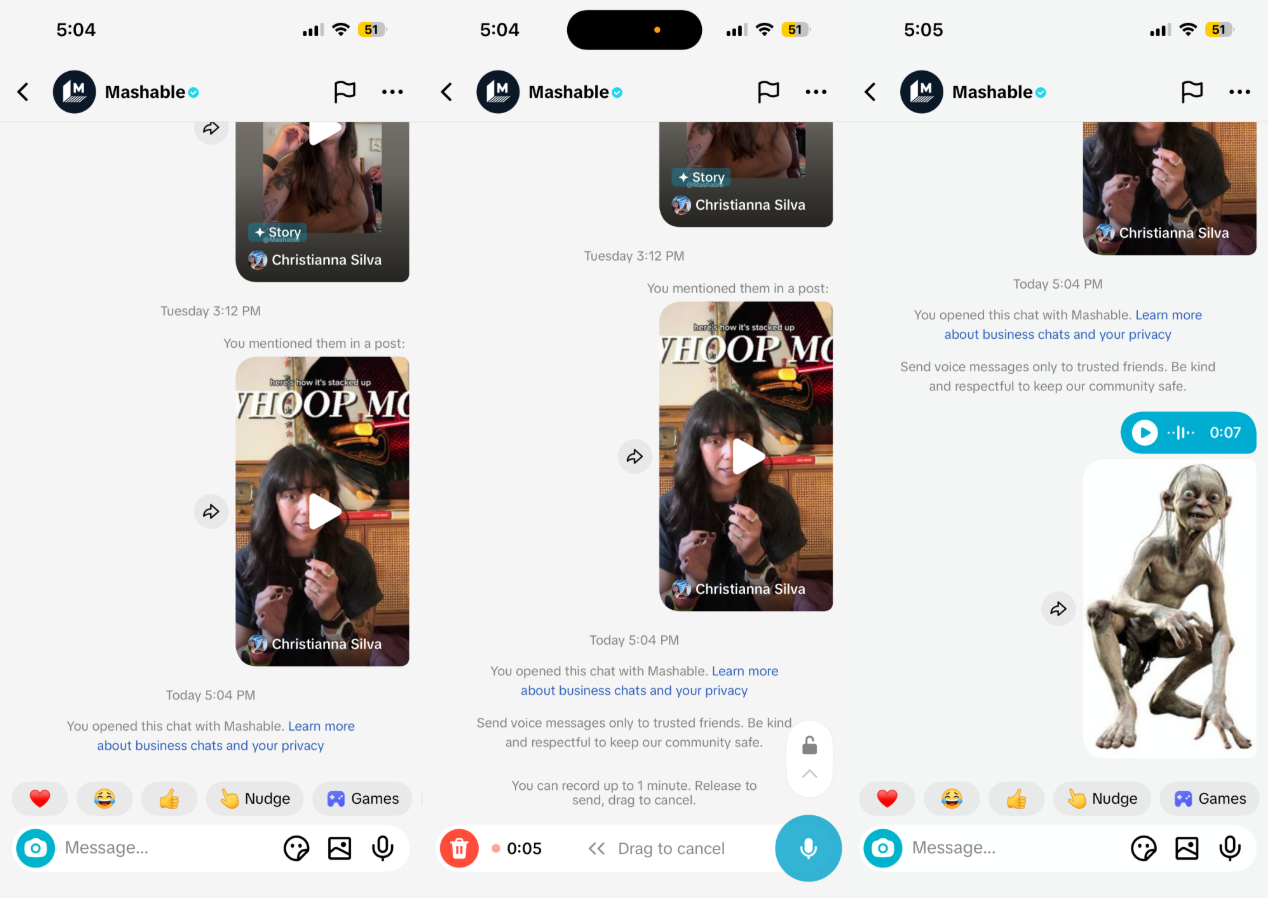
From that date, users aged 16 and over will be able to send up to 60 seconds of voice messages in one-on-one group chats and can share up to nine pictures or videos in one-time. This update marks a major upgrading of TikTok ‘ s message function, bringing it closer to social communication-centred platforms such as WhatsApp, Instagram and Snapchat in its use experience.
Click on the chat interface and hold down the microphone icon to start the recording and release it automatically. If you want to cancel the sending, you can drag your finger up or to the left when you hold it down. Voice messages are used for one-on-one group chats to increase communication efficiency and intimacy.
Users can now select up to nine pictures or video files from a mobile phone album or edit and send them directly using the TikTok camera. Supports adding editing functions such as filters, text, stickers and cuts before sending.
In parallel with the expansion of its functions, TikTok has strengthened security mechanisms, with special attention to the online protection of minors. When a new user first sends a private letter request, it is not possible to attach a picture or video to reduce the risk of harassment and garbage information. For users between 16 and 17 years of age, the system will automatically detect media documents that may contain bare content through AI technology. Once identified, the content will be shielded from successful delivery and the recipient will not see at all to ensure that young people interact socially in a safe environment.
This functional upgrade is not only a technical-level optimization, but also a reflection of TikTok ‘ s overall strategy. The platform is evolving from a content-consumption space centred on viral short video to an ecosystem that supports deep social connectivity. By enhancing its private trust function, TikTok hopes that users will not only be able to “watch ” , but also to ” interact ” and ” connect ” , thereby increasing their viscosity and platform activity.
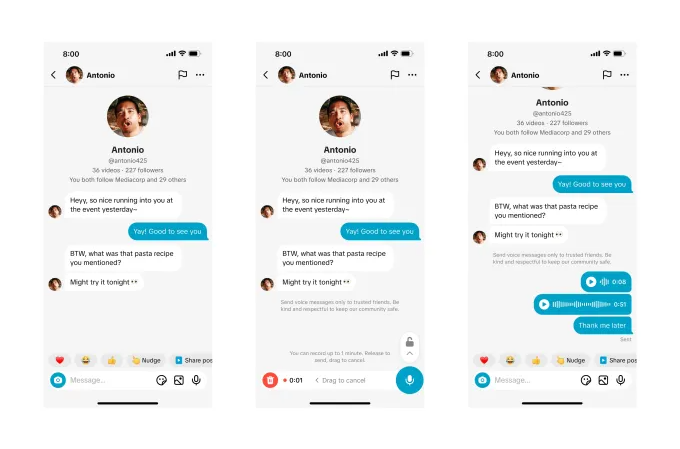
As voice messages, multimedia sharing and security mechanisms advance in tandem, TikTok is building an integrated platform for entertainment, expression and socialization. In the future, it will probably compete more directly with traditional social applications such as whatsApp, Instagram and redefine the boundaries of mobile socialization. TikTok is no longer just a “brushing video” application, driven by the dual drive of content and socialization, but is becoming an important tool for young people’s daily communication and emotional connection.