

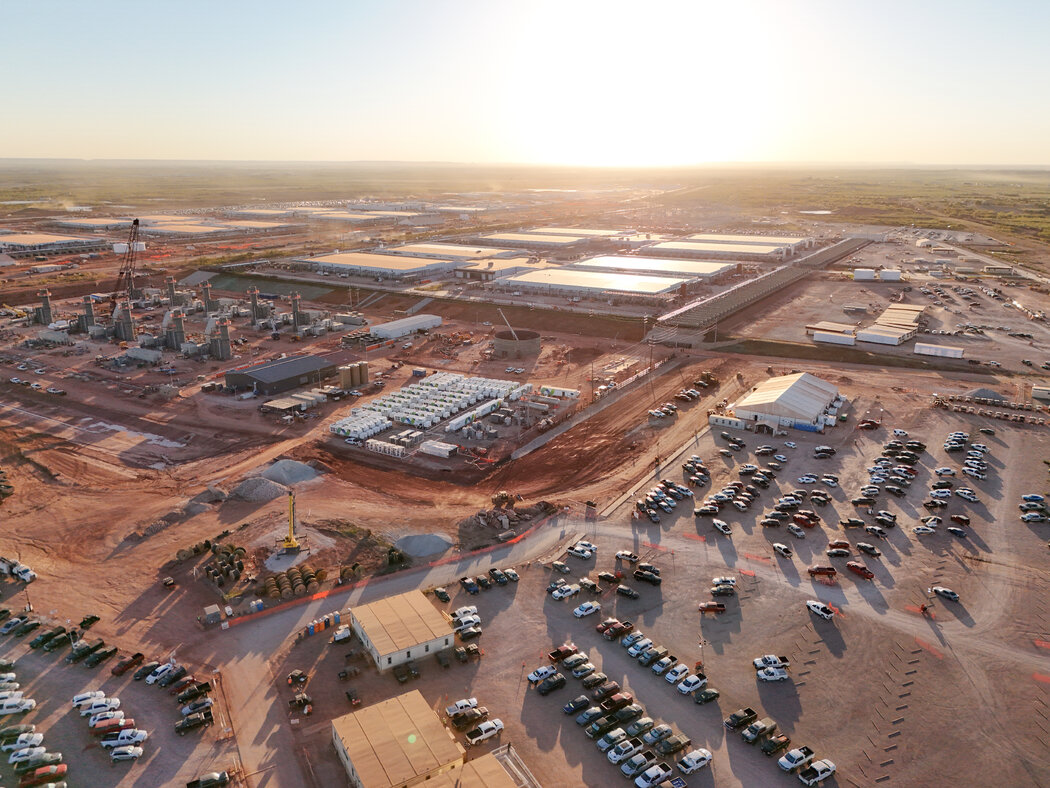
(OpenAI Stargate data centre complex in Abilin, Texas)
It is not too much to describe this period of exceptionally dynamic growth in the technology industry as a historic moment.
On Wednesday, the British Weida, which produces the chips necessary to build artificial intelligence, indicated that its quarterly profits jumped to nearly $32 billion, an increase of 65 per cent over the same period and a rise of 245 per cent over two years ago.
Just three weeks ago, Young-wei came to be the first listed company with a market value exceeding $5 trillion. The current market value of Microsoft, Google, Apple and Amazon has also reached trillions of dollars. The four enterprises recorded total profits of over $110 billion in the last quarter.
“The discussion about artificially intelligent bubbles is not overheard,” Hwang In-hoon, Chief Executive Officer of In Weida, said after the company handed over its beautiful quarterly newspaper. “But from our perspective, the situation is quite different.”
However, according to a number of industry sources, all this seemingly good news hides bad signs. They and Wong In-hoon have witnessed the same miracle of growth and wealth, yet they regard it as a fragile cardhouse. They stated that if the collapse occurred, the resulting damage would be incalculable.
Even Britain’s growth is not impeccable. The market’s demand for its chips does not mean that people want to use artificial intelligence, but rather that firms are spending so much on building artificial intelligence systems that they hope to attract paid users in the future. The Wall Street boom, led by Young Weida, was held up for only a few hours, with the company ‘ s stock price falling by about 3 per cent as of Thursday. The sharp reversal of the Technological Unit slowed down the market as a whole and the 500 index fell by 1.6 per cent that day.
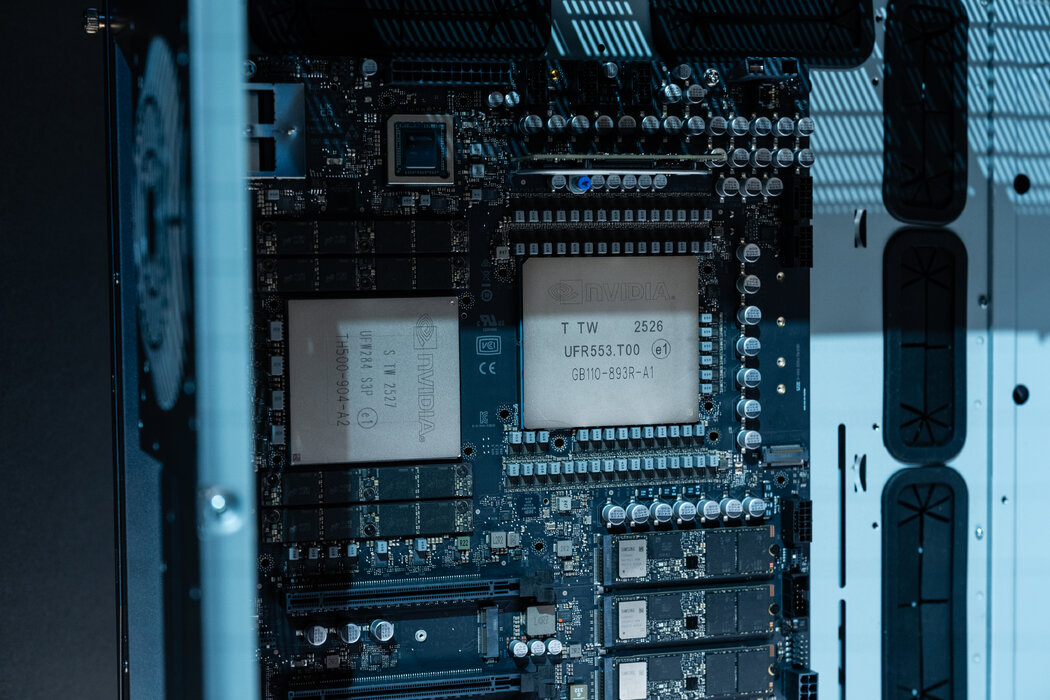
The strong quarterly performance of Ying Weidar has temporarily eased Wall Street’s concerns about huge spending on artificial intelligence.
However, the central argument of the pessimists of the artificial intelligence boom is that large sums of money are pouring into the start-up enterprises involved, which spend staggering amounts on data centres.
The current estimate of OpenAI, which detonated the boom three years ago, is about $500 billion, the most valuable start-up in the world. OpenAI’s main competitor, Anthropic, is currently estimated at about $183 billion. Thinking Machines Labs, which was created only in February this year, is also believed to have reached tens of billions of dollars.
OpenAI is not yet profitable and it is expected that it will be difficult to achieve a balance of payments by 2030. Anthropic is also in a state of loss. Thinking Machines has just launched its first product.
But it didn’t stop them burning money. Anthropic recently announced an investment of $50 billion for the construction of the new data centre. The star CEO of OpenAI, Sam Altman, stated that the company would invest $1.4 trillion in computing for its artificial intelligence.

Claude chat robots in Anthropic are increasingly popular among consumers. Some pay over $100 a month for the use of chat robots.
“What OpenAI is doing is the most exaggerating case we’ve ever seen of `presuming until it comes true’,” said Gil Luria, director of D.A. Davidson’s science and technology research. “The commitments they have made are enormous and, in fact, impossible.”
OpenAi and its partners are building a new generation of data centres in the United States at a cost of $500 billion, and this so-called “Stargate” project, in current currency terms, would be enough to support the full costs of 15 Manhattan projects, or even two full Apollo Moon projects.
“The Stargate project itself — if it really reaches $500 billion — will be the largest infrastructure project in the world and will be many times more than the current record.” Evan Conrad, Chief Executive Officer of San Francisco Compute, said that the company was a start-up enterprise focused on artificial intelligence hardware.
According to Morgan Stanley ‘ s analysts, global science and technology companies, Governments and their partners will invest nearly $3 trillion in data centres by 2028. To achieve this, they need to borrow nearly $1 trillion from banks and other financial institutions.
Over the past 12 months, Google, Microsoft, Amazon and Meta have invested approximately $360 billion in new data centres. They can afford to do so with huge profits. Others had to invest in debt. These include old companies such as Oracle and smaller companies such as CoreWeave and Nebius.
Since these debts are scattered among a large number of financial institutions — including private credit institutions and traditional banks — experts find it difficult to accurately assess how much risk is inherent in the system as a whole.
Even more worrying is the criticism that OpenAI has entered into transactions with chip manufacturers, cloud computing companies, etc., with a strange financial cycle. While receiving billions of dollars in financing from the technology giant, OpenAI paid the same firm an equal amount of money for services such as calculus.
Some financial analysts are concerned that such transactions are creating the illusion of market prosperity. Ultimately, market stability will depend on whether companies such as OpenAI will be able to make a profit before they fall into debt.
(The New York Times has indicted OpenAI and Microsoft for violating the copyright of news content by their artificial intelligence systems. Both OpenAI and Microsoft denied the charges.
Some of the trades in Inweida gave rise to the same doubts. The company announced that it would invest $100 billion in OpenAI and that the funds would eventually flow back to the company by purchasing or renting British Wida chips.
On Tuesday, Weeda announced a similar $10 billion agreement with Anthropic, which would purchase $30 billion worth of artificial intelligence algorithms supported by the British Weeda chip. This money will actually be used to calculate the purchasing power of Microsoft, which is also investing $5 billion in Anthropic.
Goldman Sachs estimates that 15 per cent of Young Weida’s sales next year will come from what critics call “self-recycling”.
The chat robots and image generators developed by AI have attracted hundreds of millions of users, many of whom pay more than $100 per month for services. However, the question remains as to whether corporate clients, who are the backbone of real profits in the technology industry, are equally keen to adopt artificial intelligence technologies.
Recent studies in McKinsey show that nearly 80 per cent of businesses claim to have applied artificial intelligence technologies, but the same percentage of firms indicate that these technologies have “no significant impact on their profits”.
In an interview with BBC this week, Sandhar Pichai, Chief Executive Officer of the Google parent company Alphabet, stated that these expenditures and soaring estimates were at least partly due to “unreasonable factors”. He warned that if the market crashes, the impact will be widespread. “I think no company is immune, and we are no exception,” he said.
The current artificial intelligence boom is often compared with the Internet bubble of the 1990s by senior members of the technology industry. When the bubble burst, hundreds of start-ups disappeared, while mature companies that provided technical support to new and emerging enterprises were also severely damaged. But some of the start-ups have made lasting success and have profoundly changed the world. – The most famous examples are Amazon and Google.
“When bubbles are formed, smart people are always overexcited by a core of legitimate value,” Altman said to journalists earlier this year. “Is the current investor as a whole overexposed to artificial intelligence? My point is yes. Is artificial intelligence the most transformative technology of our time? My answer is equally yes.”